Aclaro: How L1VE Uses Visual Process Mapping to Identify Responsibilities and Reduce Coordination Time

L1VE, a Berlin-based startup specializing in immersive virtual reality streaming, faced a common growth challenge: unclear responsibilities and undocumented processes slowed down operations. To solve this, an international student team developed “Aclaro”: a visual process mapping tool that shows every process step, assigns responsibilities to departments, and connects users directly to the right contact person. The project was conducted during the winter semester 2025 as part of the Co-Innovation Lab, a collaboration between HM Business School and Tampere University of Applied Sciences.

The Challenge of Growing Without Losing Sight

As L1VE expanded its team, processes that once existed informally in people’s heads no longer worked. Without a documented overview, team members spent valuable time figuring out who was responsible for what, leading to redundancies and delays.
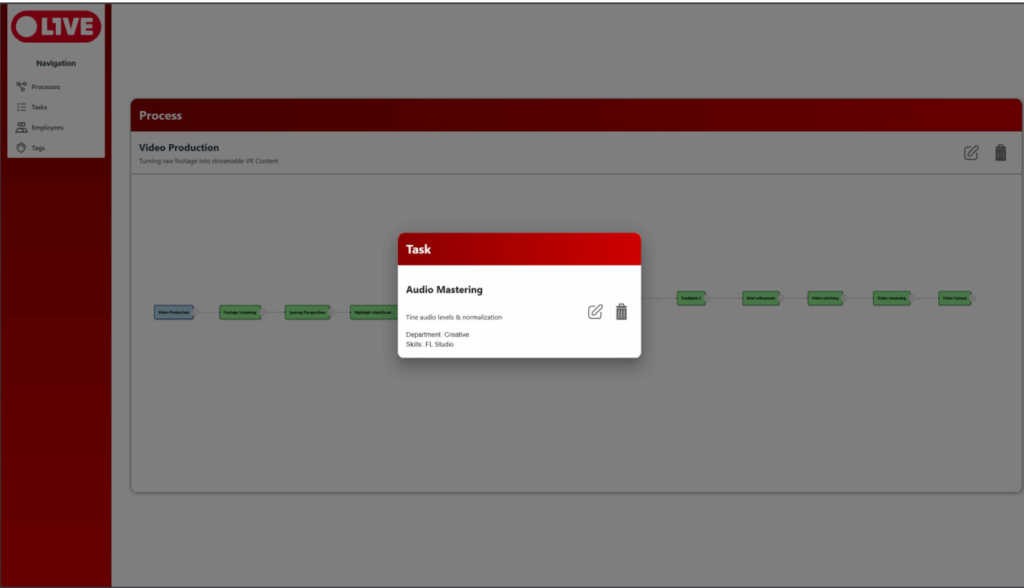
Aclaro Prototype: Process overview with tasks and responsible departments.

Aclaro: More Than a Modeling Tool

Unlike traditional process modeling tools such as BPMN editors, Aclaro is not designed for detailed workflow optimization. Instead, it focuses on one core need: providing a clear, visual overview that answers the question “Who is responsible for this?” The platform allows users to:

  • Map processes visually by defining process steps in an intuitive interface
  • Assign responsibilities by linking each step to a department and tagging required skills
  • Find the right person through an integrated employee database that shows who works in each department
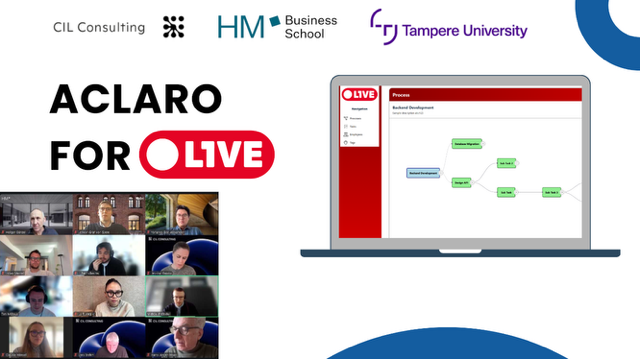
Picctured (l. to r.): Dr. Holger Günzel (lecturer), Joseph v. Spee (Student team), Edo Alexander (Student team), Julian Merkel (CTO & Board Member at L1VE), Lukas Scherzer (Student team), Prof. Dr. Jessica Slamka (lecturer), Tim Möbius (Student team), Le ToungVi (Student team), Michael Pröbstel (Student team), Claudia Hänsel (Student team), Prof. Dr. Lars Brehm  (lecturer), Hans-Jürgen Haak (lecturer) during the final presentation on the 16th of January 2026.

This structure enables leadership to quickly understand the organization’s process landscape and make informed decisions about resource allocation and bottlenecks. For employees and freelancers, it eliminates guesswork. Instead of sending emails to find the right contact, they can look up responsibilities in seconds.

“When we started L1VE, everyone knew everything. But as we grew, that stopped being true. Aclaro gives us back that clarity. Now, instead of asking ‘who handles this?’ five times a day, our team can focus on building amazing VR experiences for our customers.”, says Julian Merkel, CTO & Board Member at L1VE.

About the Co-Innovation Lab

This solution was designed in a project of the Co-Innovation Lab of Hochschule München guided by the lecturers Prof. Jessica Slamka, Prof. Dr. Holger Günzel, Prof. Dr. Lars Brehm, and Mr. Hans-Jürgen Haak together with Anne-Mari Stenbacka and Jere Käpyaho (TAMK). The Co-Innovation Lab offers students a virtual platform for learning how to work as a consulting team by creating temporary partnerships between companies, students, and lecturers.

For more information about the Co-Innovation Lab, contact holger.guenzel@hm.edu or lars.brehm@hm.edu.

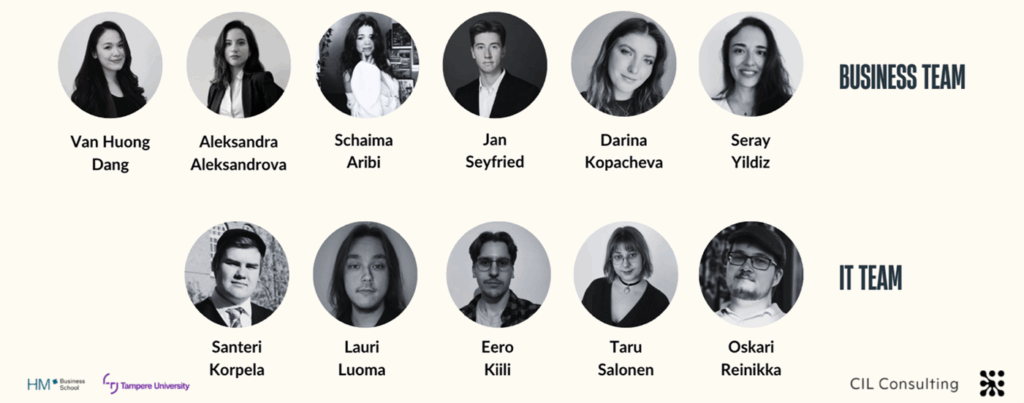
Project Team: Möbius Tim, Tuong Vi Le, Pröbstel Michael, Scherzer Lukas, Henri Nieminen, Spee Joseph, Spira Nitai, Marttila Tuuli, Edo Alexander, Sillanaukee Santeri, Nevalainen Noora, Hänsel Claudia

  • Project results: follows soon

Varala Insight: Smarter Facility Management Through Data

“Varala Insight”, a facility management solution developed by the Co-Innovation Lab team, helps Varala Sports Institute optimize occupancy, reduce energy costs, and improve operational efficiency.

The Challenge: Managing a Busy Campus Without Clear Data Visibility

Varala Sports Institute in Tampere is one of Finland’s leading sports education and training centers, welcoming athletes, students, companies, and visitors year-round. While the institute had access to extensive occupancy and booking data through its CRM/ERP systems, this information was mainly available in reports, tables, and non-visual formats, leaving staff without a clear, intuitive, and visual overview of building occupancy, seasonal demand, or underused facilities.

The lack of visual clarity made analysis time-consuming and pattern recognition difficult. This increased energy and cleaning costs and limited opportunities for targeted sales campaigns or renovations. What was missing was not data itself, but a clear and visual way to turn existing CRM/ERP data into actionable insights.

The Solution: Varala Insight — A Data-Driven Dashboard

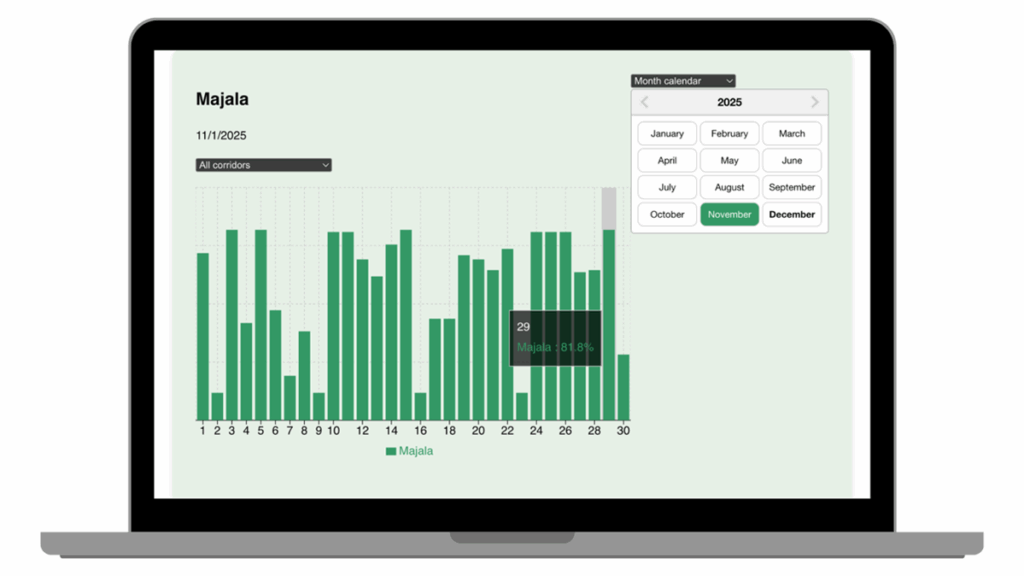
To address these challenges, a student team from the Co-Innovation Lab developed Varala Insight, a web-based dashboard that brings together Varala’s booking and occupancy data into a single view. Valara operational staff can see real-time occupancy across buildings and corridors and switch between daily, weekly, monthly, and yearly views. Sauna usage insights help identify recurring low-usage time slots, supporting targeted campaign planning. Management can export reports with just one click, eliminating the need for time-consuming manual data compilation. Together, these features give Varala a clear, data-driven understanding of how its facilities are used and where efficiency improvements can be made.

Impact: Smarter Operations, Lower Costs, and Greater Sustainability

Varala Insight helps the institute reduce unnecessary heating, optimize cleaning and maintenance, and plan marketing campaigns based on real usage patterns. The result is improved sustainability and lower operational costs. “What impressed us most was how quickly the students translated a real operational challenge into a concrete and visual draft solution.  The demo application provided a clear starting point for developing a solution that suits our operations and builds on our existing CRM/ERP data.” – Petteri Luukkainen (Director of HR, Administration & Development at Varala Sports Institute)

Varala Insight

Collaboration: An International Team Effort

The project was delivered by an international student team from Finland and Germany as part of the Co-Innovation Lab, with six master’s students from Munich University of Applied Science, and five bachelor’s students from Tampere University. The team collaborated closely with Varala’s facility manager throughout the process, ensuring the solution directly supports Varala’s real operational needs.

“Working with an international student team brought new perspectives that we would not necessarily have reached on our own. This collaboration demonstrated how student projects can create genuine value for organizations, not just academic outcomes.” – Petteri Luukkainen

Team Valara with students from Germany and Finland

About the Co-Innovation Lab

This solution was designed in a project of the Co-Innovation Lab of Hochschule München guided by the lecturers Prof. Jessica Slamka, Prof. Dr. Holger Günzel, Prof. Dr. Lars Brehm, and Mr. Hans-Jürgen Haak together with Anne-Mari Stenbacka and Jere Käpyaho (TAMK). The Co-Innovation Lab offers students a virtual platform for learning how to work as a consulting team by creating temporary partnerships between companies, students, and lecturers.

For more information about the Co-Innovation Lab, contact holger.guenzel@hm.edu or lars.brehm@hm.edu.

Author: Van Huong Dang

  • Project results: follows soon