Aclaro: How L1VE Uses Visual Process Mapping to Identify Responsibilities and Reduce Coordination Time

L1VE, a Berlin-based startup specializing in immersive virtual reality streaming, faced a common growth challenge: unclear responsibilities and undocumented processes slowed down operations. To solve this, an international student team developed “Aclaro”: a visual process mapping tool that shows every process step, assigns responsibilities to departments, and connects users directly to the right contact person. The project was conducted during the winter semester 2025 as part of the Co-Innovation Lab, a collaboration between HM Business School and Tampere University of Applied Sciences.

The Challenge of Growing Without Losing Sight

As L1VE expanded its team, processes that once existed informally in people’s heads no longer worked. Without a documented overview, team members spent valuable time figuring out who was responsible for what, leading to redundancies and delays.
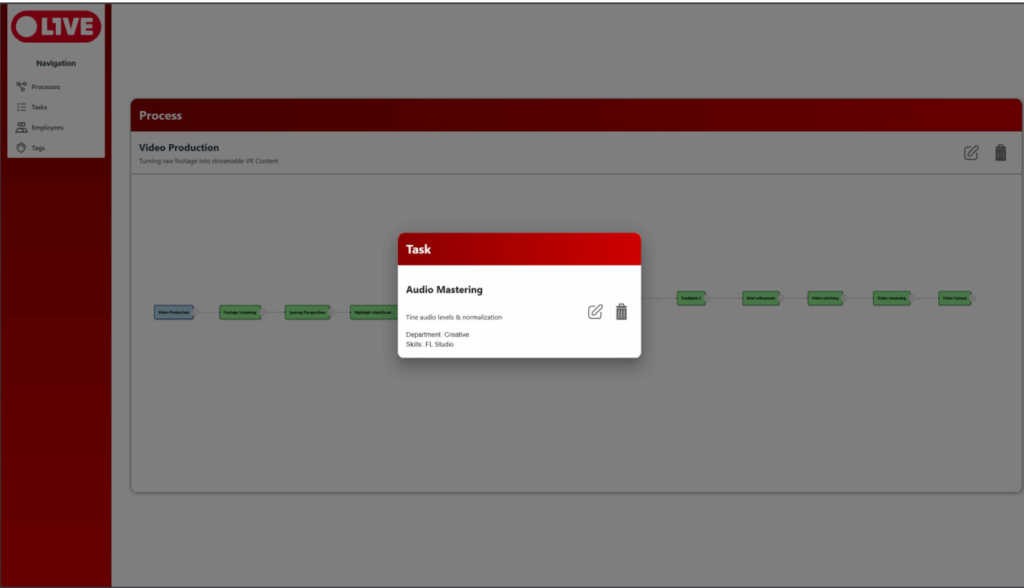
Aclaro Prototype: Process overview with tasks and responsible departments.

Aclaro: More Than a Modeling Tool

Unlike traditional process modeling tools such as BPMN editors, Aclaro is not designed for detailed workflow optimization. Instead, it focuses on one core need: providing a clear, visual overview that answers the question “Who is responsible for this?” The platform allows users to:

  • Map processes visually by defining process steps in an intuitive interface
  • Assign responsibilities by linking each step to a department and tagging required skills
  • Find the right person through an integrated employee database that shows who works in each department
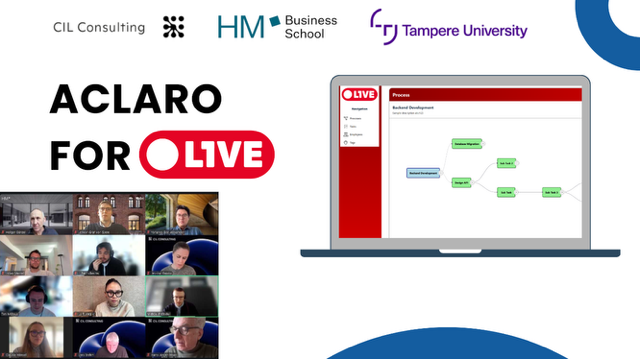
Picctured (l. to r.): Dr. Holger Günzel (lecturer), Joseph v. Spee (Student team), Edo Alexander (Student team), Julian Merkel (CTO & Board Member at L1VE), Lukas Scherzer (Student team), Prof. Dr. Jessica Slamka (lecturer), Tim Möbius (Student team), Le ToungVi (Student team), Michael Pröbstel (Student team), Claudia Hänsel (Student team), Prof. Dr. Lars Brehm  (lecturer), Hans-Jürgen Haak (lecturer) during the final presentation on the 16th of January 2026.

This structure enables leadership to quickly understand the organization’s process landscape and make informed decisions about resource allocation and bottlenecks. For employees and freelancers, it eliminates guesswork. Instead of sending emails to find the right contact, they can look up responsibilities in seconds.

“When we started L1VE, everyone knew everything. But as we grew, that stopped being true. Aclaro gives us back that clarity. Now, instead of asking ‘who handles this?’ five times a day, our team can focus on building amazing VR experiences for our customers.”, says Julian Merkel, CTO & Board Member at L1VE.

About the Co-Innovation Lab

This solution was designed in a project of the Co-Innovation Lab of Hochschule München guided by the lecturers Prof. Jessica Slamka, Prof. Dr. Holger Günzel, Prof. Dr. Lars Brehm, and Mr. Hans-Jürgen Haak together with Anne-Mari Stenbacka and Jere Käpyaho (TAMK). The Co-Innovation Lab offers students a virtual platform for learning how to work as a consulting team by creating temporary partnerships between companies, students, and lecturers.

For more information about the Co-Innovation Lab, contact holger.guenzel@hm.edu or lars.brehm@hm.edu.

Project Team: Möbius Tim, Tuong Vi Le, Pröbstel Michael, Scherzer Lukas, Henri Nieminen, Spee Joseph, Spira Nitai, Marttila Tuuli, Edo Alexander, Sillanaukee Santeri, Nevalainen Noora, Hänsel Claudia

  • Project results: follows soon

Green Gear: Unlocking Sustainability Results in Gearbox Design

German business students and Finnish IT students collaborated with sustainability consultant Prof. Dr. Markus Klein at the Co-Innovation Lab in Munich in 2025. Together, they addressed the challenge of inefficient sustainability calculations in gearbox development for small and medium sized enterprises (SMEs). The result is Green Gear, a web-based tool that replaces manual Excel workflows with automated sustainability analysis.

Sustainability Calculation in Gearbox Development

In mechanical engineering and gearbox manufacturing, sustainability calculations are increasingly required throughout the product development process. These calculations typically assess technical components across the three pillars of sustainability: environmental, economic, and social performance. Environmental aspects include CO₂ emissions and material sourcing, economic aspects focus on cost efficiency and lifecycle considerations, while social factors address issues such as labor conditions and supplier responsibility.

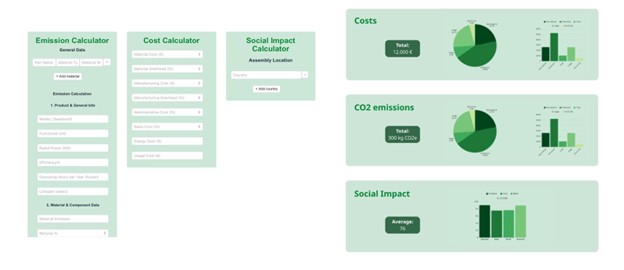
A glimpse into the website, showing input fields and results.

As sustainability consultant Prof. Dr. Markus Klein explains: “The decision on where and how to produce a gearbox is mainly driven by economic aspects like material and production costs. Due to EU regulations and public interest, ecological and social sustainability aspects will play a bigger role in future. Therefore, the holistic evaluation of these aspects is key for the decision of long-term investments.”

In practice, Prof. Dr. Markus Klein, sustainability consultant for SMEs, often conducts manual sustainability assessments using extensive Excel spreadsheets. This process requires significant manual data entry and consolidation of data from multiple sources, including gearbox components’ countries of origin, material composition, manufacturing processes, and emission factors. As a result, sustainability calculations are time-consuming, difficult to scale, and prone to inconsistencies.

A typical use case involves evaluating a gearbox during the early design or configuration phase in order to compare design alternatives and identify sustainability trade-offs before production decisions are finalized.

Challenges in Current Sustainability Assessments

By relying solely on manual processes to document and calculate gearbox sustainability, Prof. Dr. Klein faces several challenges. These include the significant time required for manual data entry, limitations in capturing all three pillars of sustainability, and outcomes that lack sufficient depth and consistency. Together, these issues reduce the reliability of the results delivered to clients.

Our Solution: Green Gear – Where Gearbox Manufacturing Meets Clear Sustainability

Green Gear is a web application designed to simplify the analysis and documentation of gearbox sustainability metrics. The tool automates the calculation of environmental (CO₂ emissions), economic, and social sustainability efforts as well as economic and social sustainability indicators, significantly reducing manual effort.

Green Gear draws on structured input data provided by users, such as component materials, supplier locations, manufacturing processes, and usage assumptions. These inputs are combined with predefined emission factors, cost parameters, and social risk indicators derived from publicly available databases and industry standards. Users can select and adjust parameters depending on the project context, enhancing both transparency and credibility.

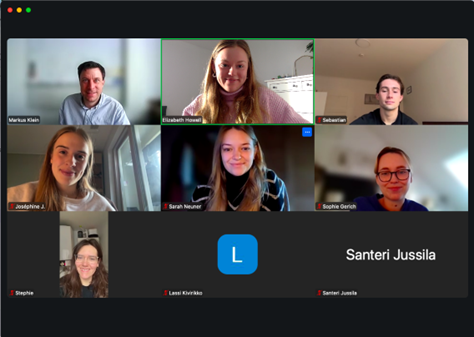
Pictured above is the group of business and IT students including Markus Klein, the client, during weekly Friday meetings. Photo credit: Elizabeth Howell

About the Co-Innovation Lab

This solution was designed in a project of the Co-Innovation Lab of Hochschule München guided by the lecturers Prof. Jessica Slamka, Prof. Dr. Holger Günzel, Prof. Dr. Lars Brehm, and Mr. Hans-Jürgen Haak together with Anne-Mari Stenbacka and Jere Käpyaho (TAMK). The Co-Innovation Lab offers students a virtual platform for learning how to work as a consulting team by creating temporary partnerships between companies, students, and lecturers.

For more information about the Co-Innovation Lab, contact holger.guenzel@hm.edu or lars.brehm@hm.edu.

  • Project results: follows soon
Varala Insight: Smarter Facility Management Through Data

“Varala Insight”, a facility management solution developed by the Co-Innovation Lab team, helps Varala Sports Institute optimize occupancy, reduce energy costs, and improve operational efficiency.

The Challenge: Managing a Busy Campus Without Clear Data Visibility

Varala Sports Institute in Tampere is one of Finland’s leading sports education and training centers, welcoming athletes, students, companies, and visitors year-round. While the institute had access to extensive occupancy and booking data through its CRM/ERP systems, this information was mainly available in reports, tables, and non-visual formats, leaving staff without a clear, intuitive, and visual overview of building occupancy, seasonal demand, or underused facilities.

The lack of visual clarity made analysis time-consuming and pattern recognition difficult. This increased energy and cleaning costs and limited opportunities for targeted sales campaigns or renovations. What was missing was not data itself, but a clear and visual way to turn existing CRM/ERP data into actionable insights.

The Solution: Varala Insight — A Data-Driven Dashboard

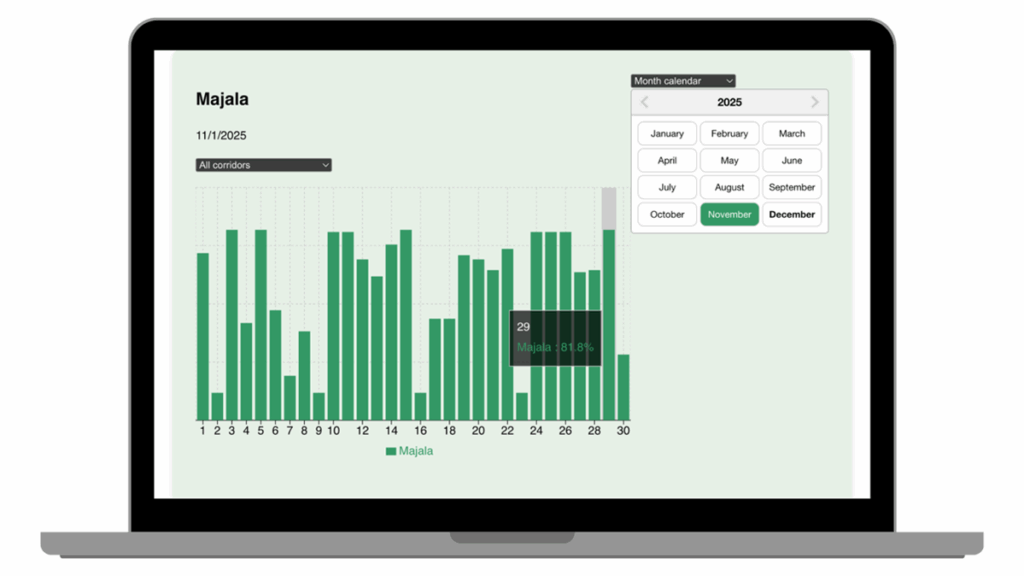
To address these challenges, a student team from the Co-Innovation Lab developed Varala Insight, a web-based dashboard that brings together Varala’s booking and occupancy data into a single view. Valara operational staff can see real-time occupancy across buildings and corridors and switch between daily, weekly, monthly, and yearly views. Sauna usage insights help identify recurring low-usage time slots, supporting targeted campaign planning. Management can export reports with just one click, eliminating the need for time-consuming manual data compilation. Together, these features give Varala a clear, data-driven understanding of how its facilities are used and where efficiency improvements can be made.

Impact: Smarter Operations, Lower Costs, and Greater Sustainability

Varala Insight helps the institute reduce unnecessary heating, optimize cleaning and maintenance, and plan marketing campaigns based on real usage patterns. The result is improved sustainability and lower operational costs. “What impressed us most was how quickly the students translated a real operational challenge into a concrete and visual draft solution.  The demo application provided a clear starting point for developing a solution that suits our operations and builds on our existing CRM/ERP data.” – Petteri Luukkainen (Director of HR, Administration & Development at Varala Sports Institute)

Varala Insight

Collaboration: An International Team Effort

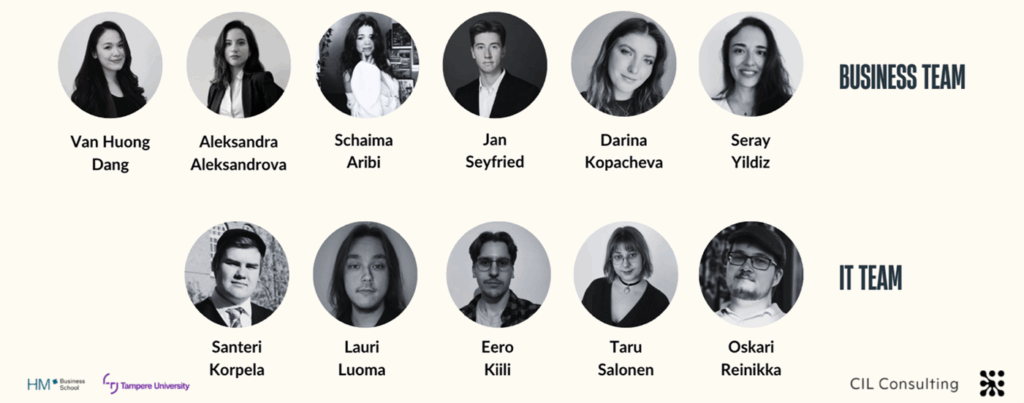
The project was delivered by an international student team from Finland and Germany as part of the Co-Innovation Lab, with six master’s students from Munich University of Applied Science, and five bachelor’s students from Tampere University. The team collaborated closely with Varala’s facility manager throughout the process, ensuring the solution directly supports Varala’s real operational needs.

“Working with an international student team brought new perspectives that we would not necessarily have reached on our own. This collaboration demonstrated how student projects can create genuine value for organizations, not just academic outcomes.” – Petteri Luukkainen

Team Valara with students from Germany and Finland

About the Co-Innovation Lab

This solution was designed in a project of the Co-Innovation Lab of Hochschule München guided by the lecturers Prof. Jessica Slamka, Prof. Dr. Holger Günzel, Prof. Dr. Lars Brehm, and Mr. Hans-Jürgen Haak together with Anne-Mari Stenbacka and Jere Käpyaho (TAMK). The Co-Innovation Lab offers students a virtual platform for learning how to work as a consulting team by creating temporary partnerships between companies, students, and lecturers.

For more information about the Co-Innovation Lab, contact holger.guenzel@hm.edu or lars.brehm@hm.edu.

Author: Van Huong Dang

  • Project results: follows soon
OBSTPLAN: Empowering Landowners to Create Orchard Meadows and Boost Biodiversity

Meadow orchards, traditional ecosystems rich in biodiversity, are biodiverse landscapes, where widely spaced fruit trees are combined with natural grasses and wildflowers, creating a habitat that supports wildlife while producing food. These traditional ecosystems are rich in biodiversity and preserve the cultural and ecological heritage of regions like Bavaria. Yet, these orchards have been in significant decline due to urbanization and economic pressures. OBSTPLAN addresses this pressing challenge by offering a simple, user-friendly solution to help landowners and communities restore these valuable landscapes.

Bavaria has lost approximately 60% of its meadow orchards in recent decades. These natural habitats, vital for countless insects, birds, and other wildlife, have been replaced by industrial agriculture and urban development. As meadow orchards vanish, so too does the biodiversity they support. Despite available land and resources, many potential orchard developers lack the knowledge or tools needed to plan and maintain these ecosystems effectively. Furthermore, relevant information is often scattered across numerous websites and, in some cases, remains insufficiently digitized.

OBSTPLAN is here to bridge that gap. Designed as an centralized and intuitive digital platform, it empowers users to:

  • Plan and manage meadow orchards tailored to their specific land conditions.
  • Access localized recommendations for fruit tree varieties.
  • Learn about subsidies and funding opportunities to support their efforts.
Color-coded map and recommended apple tree varieties

As one early user noted, “OBSTPLAN makes it easy to transform unused land into vibrant ecosystems that benefit both the environment and the community.”

Traditional meadow orchards, once common in Bavaria, are more than just agricultural spaces. The loss of these orchards, driven by economic and urban pressures, has reduced biodiversity and led to the extinction of many native fruit varieties.

To combat this, OBSTPLAN integrates technology and ecological expertise, providing actionable guidance for restoring these vital landscapes. With its interactive features, OBSTPLAN simplifies decision-making, allowing users to:

  • Evaluate their land’s potential for orchard development.
  • Select optimal tree varieties based on soil quality and other factors.
  • Navigate the often-complicated funding landscape.

Users can view color-coded maps that recommend suitable apple tree varieties based on soil conditions and regional factors. Green indicates that the soil is excellent for the apple variety, yellow indicates a mixed soil type where the apple could also be planted, and red suggests avoiding planting the variety in that soil. These insights ensure that users can optimize their efforts for both productivity and biodiversity.

OBSTPLAN is designed for beginners and experts alike. It plans to expand its offerings with educational workshops and community initiatives, fostering a culture of environmental stewardship.

In collaboration with the Rotary Club Neuburg an der Donau, OBSTPLAN promotes sustainable agriculture and biodiversity. The platform’s user-friendly interface and practical features save time and reduce barriers for farmers, landowners, and community groups, enabling them to contribute to a greener Bavaria.

Team and client Holger Pilgenröther (Rotary Neuburg)

OBSTPLAN’s initial focus is on Bavarian landscapes, particularly around Neuburg an der Donau. By providing localized solutions, it addresses specific regional needs while setting the stage for broader applications. Supported by the Rotary Club, OBSTPLAN aims to expand its reach, empowering communities across Germany to restore biodiversity and cultivate sustainable landscapes.
The success of OBSTPLAN demonstrates the power of collaboration between academia, industry, and community organizations. Developed by students from the University of Applied Sciences Munich (HM) and Tampere University of Applied Sciences (TAMK), OBSTPLAN is a shining example of innovation in action.
With OBSTPLAN, the future of Bavaria’s meadow orchards is in your hands. Transform underused land into thriving ecosystems and play a role in preserving biodiversity for generations to come. Together, we can cultivate a greener, more sustainable future.

.

About the Co-Innovation Lab

This solution was designed in a project of the Co-Innovation Lab of Hochschule München guided by the lecturers Prof. Dr. Holger Günzel, Prof. Dr. Lars Brehm, Prof. Dr. Jessica Slamka, Mr. Hans-Jürgen Haak, Ms. Anne Mari Stenbacka and Mr. Jere Käpyaho. The Co-Innovation Lab offers students a virtual platform for learning how to work as a consulting team by creating temporary partnerships between companies, students, and lecturers.

For more information about the Co-Innovation Lab, contact holger.guenzel@hm.edu or lars.brehm@hm.edu.

  • Project results:

EnerWeave: Finding the perfect system for you to optimize energy consumption

Students develop a new application to match a unique set of energy devices with the perfect system to combine them, centralizing energy management and optimizing consumption.

As more homeowners transition to smart homes, the demand for effective Home Energy Management Systems (HEMS) has grown significantly. HEMS combine all energy devices, providing a unified energy overview and enabling centralized optimization of energy consumption. However, finding the perfect HEMS that connects individual devices can be complex and time consuming often accompanied by an overwhelming influx of information.

To tackle this challenge, the Co-Innovation Lab, which brings together students from Munich University of Applied Sciences and Tampere University of Applied Sciences, has developed EnerWeave together with SPINE GmbH, a Munich-based clean energy technology start-up. EnerWeave is a user-friendly application that recommends the optimal HEMS based on a household’s individual energy setup.

The application could be launched by SPiNE GmbH. Keep an eye out and give it a try!

The idea was to make it easy for the user to transition to sustainable and cost-effective energy management. By simply selecting the hardware from the list of devices provided, EnerWeave creates a customized overview of the home’s energy setup. It then analyzes this setup and provides real-time recommendations for the most suitable HEMS, highlighting key features and offering a direct link to the recommended system. EnerWeave ensures that the recommended HEMS is compatible with the devices the user already owns, while also helping them plan future hardware purchases based on the supported HEMS ecosystem.

By simply selecting devices from the list, the individual setup can be created for analysis.

“EnerWeave is a great tool for closing the information-gap between HEMS providers and customers / installers in search of a suitable HEMS. The Co-innovation lab has helped us to rapidly design and develop the application. SPiNE is definitely planning to launch and extend this as a product in the near future.” – Cooperation Partner, Dr. Martin Stötzel

EnearWeave was developed in collaboration with 11 students from different countries including Germany, Finland, Czech Republic, India and Mexico. With different academic backgrounds including Business Administration, Digital Technology Management and Computer Science, the students managed to create a high-quality software that matches the vision of SPiNE.

The team (names from left to right and top to bottom): Lilian Gnann, Angelica Bravo, Pranav Deep, Krutika Konwar, Terezie Rajtarova, Anna Kulovuori, Jonna Kyllönen, Sebastian Stumpf, Mikko Pasanen, Aleksi Väätäinen, Otto Melentjeff

The students worked closely with SPiNE’s founders and partners. Direct and regular feedback ensured that the project was adapted to the needs and requirements of the start-up.

About the Co-Innovation Lab

This solution was designed in a project of the Co-Innovation Lab of Hochschule München guided by the lecturers Prof. Dr. Holger Günzel, Prof. Dr. Lars Brehm, Prof. Dr. Jessica Slamka, Mr. Hans-Jürgen Haak, Ms. Anne Mari Stenbacka and Mr. Jere Käpyaho. The Co-Innovation Lab offers students a virtual platform for learning how to work as a consulting team by creating temporary partnerships between companies, students, and lecturers.

For more information about the Co-Innovation Lab, contact holger.guenzel@hm.edu or lars.brehm@hm.edu.

  • Project results:

Creation of Audio Reports for Facility Managers at the Museum of London

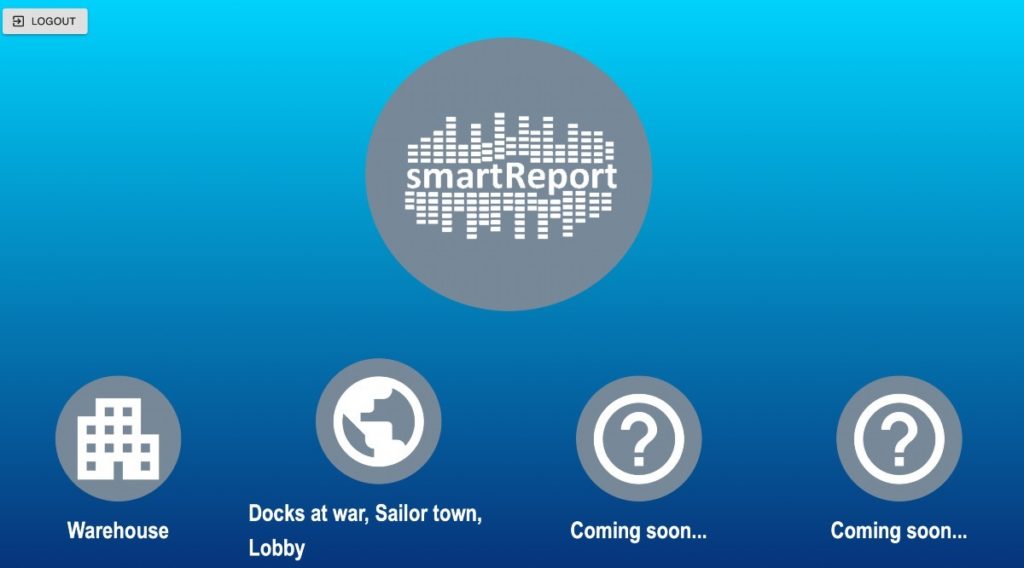
The Co-Innovation Lab of the Munich University of Applied Sciences enabled a team of its’ students to demonstrate their skills. As part of the project, they developed a web-based software solution for the Museum of London (MOL). The smartReport (SRP) application collects sensor data from the building and creates audio reports that are made available to the museums’ Facility Managers. The SRP provides a general overview, helps with long-term maintenance of the building, and supports day-to-day operations by providing building data in a convenient way.


Dashboard view to access the current status reports on the building data of the Museum of London Docklands.

Museum of London – A building full of history and innovative drive

The Museum of London Docklands is committed to maintaining its historical repertoire. The staff, as well as the public of London, share a great interest in presenting a part of their history to visitors from all over the world for years to come. With this in mind, it is important to roll out innovative technology and enable the facility managers to do so as best as possible.

A matter of heart – The need for novel software solutions in everyday life is apparent

Until now, facility managers struggled with cumbersome information processes: Long and complicated chains of communication, complex software systems, and a missing integrated overview. They wondered if it is possible to be informed more quickly about critical data such as the humidity or temperature. Enabled employees, that is exactly what the technical management of the Museum has at heart. They are behind a new innovative thrust and are willing to invest in new technical implementations.

Co-Innovation Lab develops a web app that informs the user about building data via audio

The user-friendly application makes the facility managers’ everyday work easier. They can flexibly access the status reports from any location in the building via web either on their mobile phones or on the desktop computers in the backoffice. For the facility managers, this means no more cumbersome trips to the backoffice and an immediate understanding of the health of the bulding conditions and risk exposures of important exhibits while on the museum floor. But SmartReport wouldn’t be smart if it didn’t have smart functions in it. In the case of the novel SmartReport app, they come in form of dynamically created audio reports from realtime building data. The big benefit: Facility managers can access and assess everything relevant while action and without any interruption of their ongoing tasks.

Build things people need – Amazon Web Services as technical and methodical support

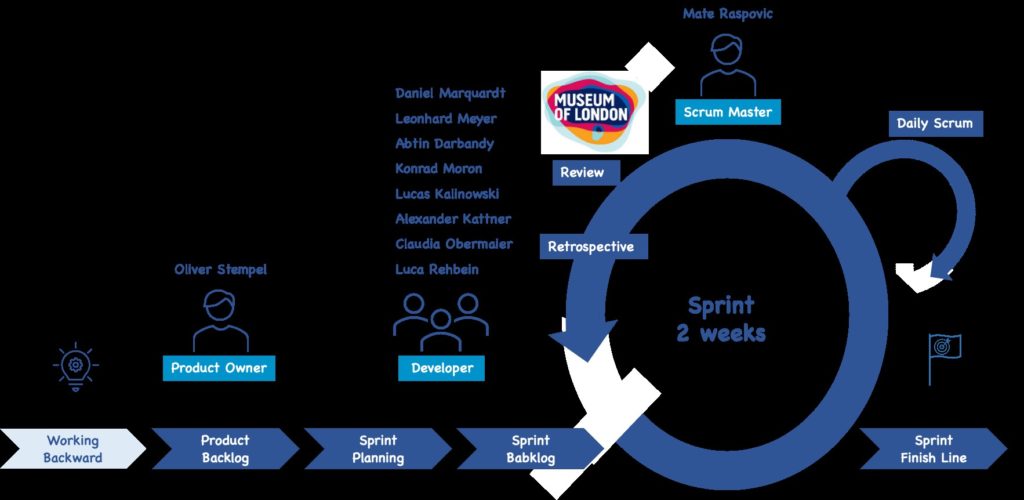
The app was developed in cooperation with partners from Amazon AWS who coached the team throughout their project. A modern methodology called ‘Amazon Working Backwards’ was applied to emphasize and approach the need of the facility managers in London. Based on regular talks and reviews the prototype was created in small but quick iterations.

The management, as well as the facility managers, are enthusiastic about the new solution

During the solution presentation, the facility managers and more than ten other stakeholders from the Museum of London praised the successfully validated prototype. A lively review and enthusiastic discussion about the implementation and future use cases has proven that the project hit the needs and the students fullfilled the core philosophy behind the Co-Innovation approach.

“As far as I know, this is the very first time in the history of the Museum of London that audio reports were created from real data in London!” – Steve Watson,Technical Lead at the Museum of London Docklands

“I just wanted to say it has been great working with you on this. I really like how the team approached and recognized our need just to prove how it could be met in such a short time” – John Laciofano,Facility Manager of the MOL

Team members of the Co-Innovation project: Roles of the Scrum Process & Working Backward Process

This Co-Innovation Lab project was carried out in cooperation with the Digital Transformation Lab (DTLab) at Munich University of Applied Sciences:
The Digital Transformation Lab (DTLab) at Munich University of Applied Sciences is dedicated to the major social challenges of our time. Together with stakeholders in the public sector, students develop forward-looking solutions. They are supported by Amazon Web Services with state-of-the-art cloud technologies and the Working Backwards innovation methodology. We live digital transformation.

More information about the Co-Innovation Lab and the Digital Transformation Lab (DTLab) at Munich University of Applied Sciences:

Wind power becomes digital

The platform developed by HM students as part of the Co-Innovation Lab for the State Agency for Energy and Climate Protection (LENK) is intended to help mayors better inform their community about the topic of wind power in the future. LENK and the Co-Innovation Lab at Munich University of Applied Sciences worked together as part of a project in the period from March to July 2021.

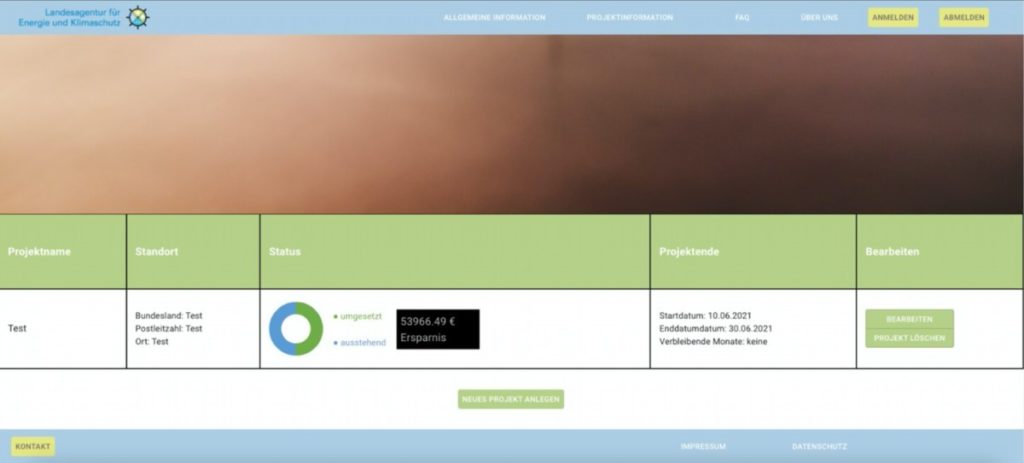
Mayors will also be able to create, edit and manage projects independently in the future. A display also provides information about the potential earnings if the wind power plant had been fully operational from the start. (Source: www.lenk.de)

The State Agency for Energy and Climate Protection (LENK) is actively engaged in implementing the political requirements for the energy transition and climate protection. In doing so, it acts on the one hand as a competence and consulting agency of the Free State of Bavaria and on the other hand as a driving force for the implementation of climate policy measures. A particular focus is on the expansion of renewable energies, especially wind energy.

Wind energy to become more transparent

The client was represented by the project partners Ulrich Buchhauser (Head of the State Agency for Energy and Climate Protection) and Keywan Pour-Sartip (C.A.R.M.E.N. e.V). The 10-member student consulting team consisted of bachelor’s and master’s students from the business administration, design and computer science departments. Within the framework of the project, an innovative platform was created that will allow mayors to inform their citizens about the topic of wind power in a targeted and fact-based manner in the future. The aim is to eliminate the spread of misinformation as far as possible and to create transparency. A central point of contact for interested parties did not exist before the website was introduced.

Information platform and project management system on one website

In the future, mayors should also be able to plan, create and manage projects independently. A ready-made action plan also shows which measures still need to be taken so that the intended wind power project can be successfully implemented. An integrated site search as well as the linking with the map of the Energy Atlas of Bavaria also allows a precise planning of new projects.

Mayor and citizens are fully informed in the future

Keywan Pour-Sartip (C.A.R.M.E.N e.V) is also convinced by the innovative concept of the HM students: “As a result of this collaborative effort, we have succeeded in creating a platform that provides mayors with appropriate access to information and helps them support their wind energy projects.”


This Co-Innovation Lab project was carried out in cooperation with the Digital Transformation Lab (DTLab) at Munich University of Applied Sciences:
The Digital Transformation Lab (DTLab) at Munich University of Applied Sciences is dedicated to the major social challenges of our time. Together with stakeholders in the public sector, students develop forward-looking solutions. They are supported by Amazon Web Services with state-of-the-art cloud technologies and the Working Backwards innovation methodology. We live digital transformation.

More information about the Co-Innovation Lab and the Digital Transformation Lab (DTLab) at Munich University of Applied Sciences:

Fit for the transformation of traffic in Munich with MUCmoves

An interdisciplinary team of computer science and business administration students at Munich University of Applied Sciences has developed a digital platform that bundles traffic data from different sources in one place and allows Munich’s traffic planners to base projects on the traffic turnaround on reliable and high-quality mobility data.

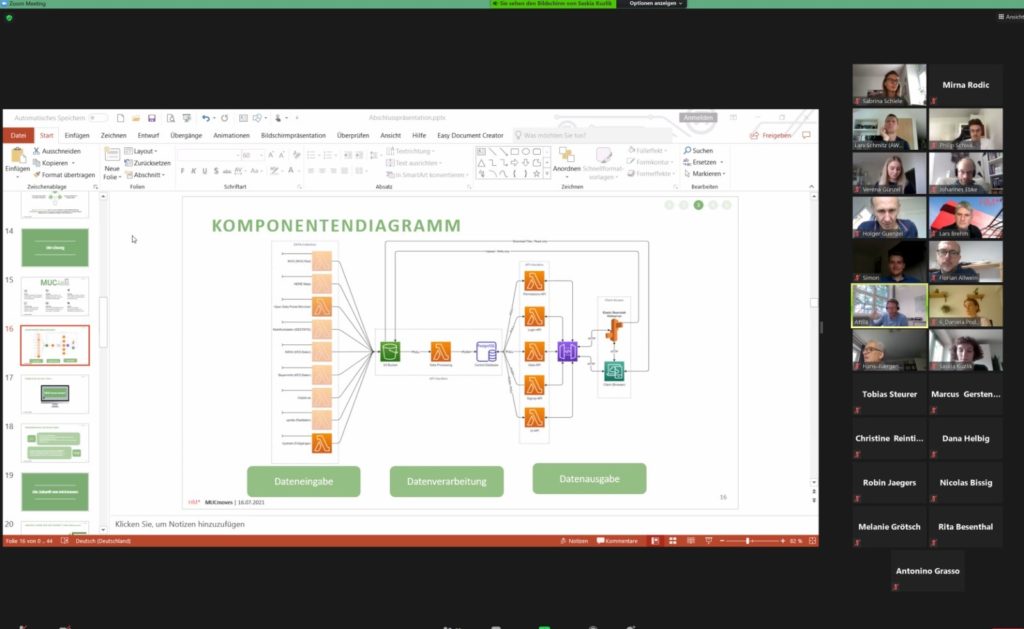
Students present MUCmoves to the client and other stakeholders at the final event.

Planning transportation projects requires one thing above all else: lots of data. It should be complete and reliable and, if possible, cover all modes of transport. A reliable data basis is indispensable, especially for a project of the century such as the transformation of the transport system.

No transformation of traffic without data

“We are shaping the traffic turnaround for a sustainable, livable future” – this is the vision of the Munich Mobility Department. But this is precisely where the unit, which was founded in January 2021, faces a problem: The traffic planners lack reliable data on stationary and flowing traffic on which to base their projects. The data they have collected themselves from sensors, video recordings and manual counts is not sufficient – relying on assumptions and extrapolations is too risky for a project as large and important as the traffic turnaround.

As part of the project course “D3I-DB.3 Project Study: Digital Technologies” / “M1.5o & M4.13o Project Study” / “Software Architecture” at the Munich University of Applied Sciences, Mr. Attila Lüttmerding, Head of Department “Basis and Data” in the “Strategy” area of the Mobility Department, commissioned the twelve-member team of computer science and business administration students to improve the data situation on flowing traffic in Munich. The project took place in cooperation with the Co-Innovation Lab and the Digital Innovation Lab of Munich University of Applied Sciences.

MUCmoves – All of Munich’s traffic data in one place

MUCmoves, the students’ digital solution, is able to collect and standardize traffic data from a wide variety of sources in a central database. A filter function allows the user to select the location, time, date and mode of transport so that the traffic planners can display the traffic data relevant to them. Depending on preference, the data is visualized as a line, bar or radar chart and as a simple table. For further internal processing, the traffic data can be downloaded both as a table and as raw data.

Companies or individuals who want to make traffic data available can upload it to MUCmoves and thus increase the platform’s database. Since the mobility department can assign access rights for this, it is ensured that only reliable data sources are fed in.

Retrieve traffic data quickly, easily and securely

Thanks to MUCmoves’ central database, transportation planners now have the ability to more quickly retrieve data from different sources and compare it in one collected location. “It is a benefit that all data is collected in one place and no longer has to be looked up in several folders. Especially the data from the pedestrian zones will be helpful for our area,” Tobias Steurer from the mobility department praised the prototype at the final event.


This Co-Innovation Lab project was carried out in cooperation with the Digital Transformation Lab (DTLab) at Munich University of Applied Sciences:
The Digital Transformation Lab (DTLab) at Munich University of Applied Sciences is dedicated to the major social challenges of our time. Together with stakeholders in the public sector, students develop forward-looking solutions. They are supported by Amazon Web Services with state-of-the-art cloud technologies and the Working Backwards innovation methodology. We live digital transformation.

More information about the Co-Innovation Lab and the Digital Transformation Lab (DTLab) at Munich University of Applied Sciences:

InSite – Seeing how a museum feels

As part of the Co-Innovation Lab at Munich University of Applied Sciences, ten Master’s and Bachelor’s students from the faculties of Business Administration & IT developed and implemented a concept for data-driven facility management for the Museum of London (MoL) in the summer semester of 2021.

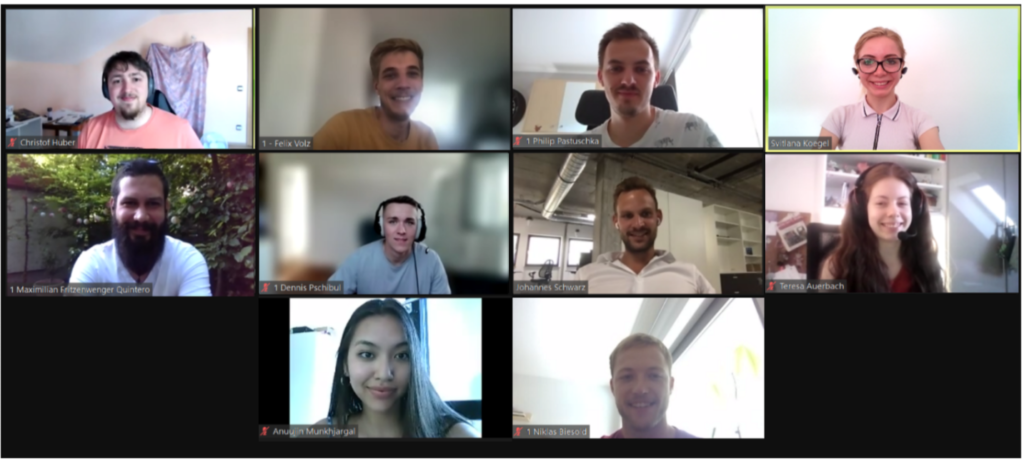
The project team at a virtual SPRINT review session in June 2021 (from left to right: Christof Huber – Team Developer (IT), Felix Volz – Team Product Owner, Philip Pastuschka – Team Developer (IT), Svitlana Kögel – Team Scrum Master; 2. Row: Maximilian Fitzenwenger Quintero – Team Developer (Business Administration), Dennis Pschibul – Team Developer (IT), Johannes Schwarz – Team Developer (Business Administration), Terea Auerbach – Team Developer (IT); 3rd row: Anuujin Munkhjargal – Team Developer (Business Administration), Niklas Biesold – Team Developer (Business Administration)) – Picture: Felix Volz

Dissolve dependencies

The Museum of London documents the history of the British capital from prehistoric times to modern times. A variety of exhibits are displayed in a number of galleries across the floors of the building, which require certain constant environmental conditions at all times, from which there should be no deviation. When errors occur, the facility manager (FM) should respond as quickly as possible.

Identifying and locating problems took an enormous amount of time and made the museum dependent on an outside service provider to access the data that was collected in the building, but this did not speed up the process or make it sustainable.

The central task was to integrate and visualize the existing building data on a platform in such a way that the facility manager can directly use it to gain a centralized, transparent and detailed insight into the building data in order to gain a better understanding of the building and to be able to react both more quickly and more independently to any changes.

Create real added value

For this purpose, the Museum of London, represented by Steve Watson (Client & Technical Lead, MoL) and John Iaciofano (Customer & Facility Manager, MoL), turned to the Co-Innovation Lab of the Munich University of Applied Sciences. The ten-member project team was supported by Prof. Dr.-Ing. Holger Günzel and Prof. Dr. Lars Brehm (both MUAS – Lecturer), the coaches Hans-Jürgen Haak (MUAS – Coach) and Lars Schmitz (Amazon – Coach), and the PhD student Maximilian Günzel (MUAS – SME).

Customer satisfaction at all levels

Steve Watson assesses the Co-Innovation Lab’s involvement as follows: “The project team took the first step for the Museum of London to make our building data comprehensible for us, and to enable more data-driven decisions. Technical, organizational as well as business aspects were highlighted. As a result, the work product provides a good basis for further planning in this area.”


This Co-Innovation Lab project was carried out in cooperation with the Digital Transformation Lab (DTLab) at Munich University of Applied Sciences:
The Digital Transformation Lab (DTLab) at Munich University of Applied Sciences is dedicated to the major social challenges of our time. Together with stakeholders in the public sector, students develop forward-looking solutions. They are supported by Amazon Web Services with state-of-the-art cloud technologies and the Working Backwards innovation methodology. We live digital transformation.

More information about the Co-Innovation Lab and the Digital Transformation Lab (DTLab) at Munich University of Applied Sciences:

Evaluate online surveys quickly, accurately and cost-effectively with SurveySolver

Co-developed by students at Munich University of Applied Sciences’ Co-Innovation Lab, the “SurveySolver” software supports Green City Experience (GCX) citizen participation processes, making sustainability and climate protection a priority for municipal decision-makers.

GCX conducts online citizen surveys to accompany large organizations, especially municipalities, in implementing climate-friendly urban development in the interest of the population. Through surveys and citizens’ councils in communities or municipalities, GCX identifies the needs and wishes of citizens and collects suggestions for urban development. This is intended to create a basis for implementing political projects in the interests of citizens with a particular focus on climate protection.

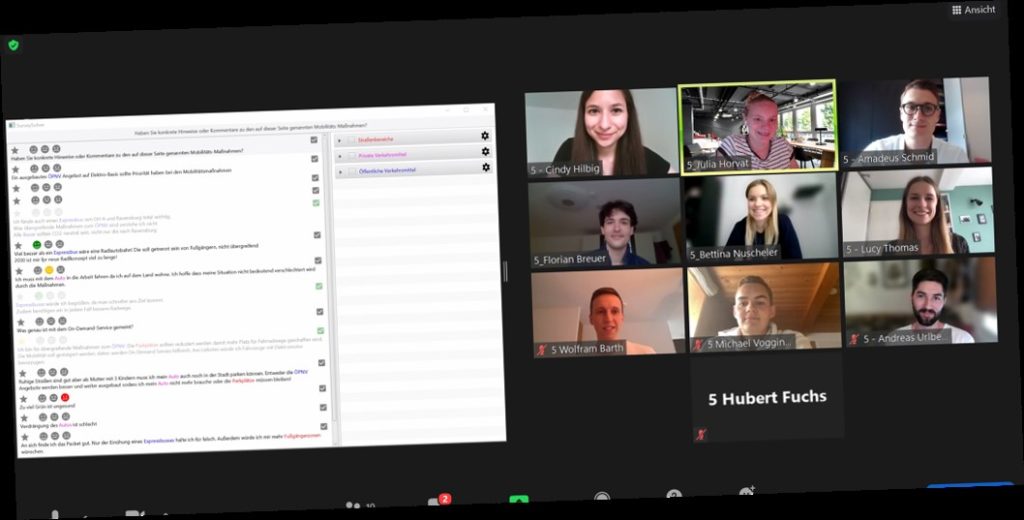
With SurveySolver, the interdisciplinary team, consisting of students from the departments of computer science, business administration and design, has developed a tool that makes it easier for Marianne Pfaffinger – Head of Participation at GCX – and her colleagues to cluster text responses in citizen surveys and to present them clearly after their evaluation.

“It is amazing what you have already achieved in such a short time. The results show me and my team that the evaluation process of our qualitative surveys will be much easier in the future. With SurveySolver, we save time and human resources that benefit other climate protection projects .” – Green City Experience GmbH, Pia Bolkart

The students are proud to contribute to more sustainability and a better implementation of climate protection projects with this project. Through the framework of the Co-Innovation Lab, Julia Horvat (Project Owner), Cindy Hilbig (Scrum Master), Wolfram Barth, Florian Breuer, Hubert Fuchs, Bettina Nuscheler, Amadeus Schmid, Lucia Thomas, Andreas Urlberger and Michael Vogginger (Developer) were able to carry out an IT project in a creative process, practically learning methods such as Working Backwards and SCRUM. In addition, the challenges as a consultant in a SCRUM project could be learned and experienced. This process was supported in particular by Hans-Jürgen Haak and additionally by Prof. Dr. Lars Brehm (Faculty of Business Administration), Prof. Dr. Holger Günzel ( Faculty of Business Administration), Prof. Dr. Johannes Ebke ( Faculty of Computer Science and Mathematics) and Lars Schmitz (Digital Innovation Lead, Amazon Web Services).


This Co-Innovation Lab project was carried out in cooperation with the Digital Transformation Lab (DTLab) at Munich University of Applied Sciences:
The Digital Transformation Lab (DTLab) at Munich University of Applied Sciences is dedicated to the major social challenges of our time. Together with stakeholders in the public sector, students develop forward-looking solutions. They are supported by Amazon Web Services with state-of-the-art cloud technologies and the Working Backwards innovation methodology. We live digital transformation.

More information about the Co-Innovation Lab and the Digital Transformation Lab (DTLab) at Munich University of Applied Sciences: